Crucial Historical Timeline & Construction Secret
To understand the unique layout of the Chania Old Port, one must look back at the strategic engineering of the Venetian Republic, which controlled the island of Crete from the 13th to the 17th centuries.
1320: Venetian Construction Begins -> 1467-1599: Neoria Shipsheds Erected -> 1645: Ottoman Empire Conquest -> 1830: Egyptian Lighthouse Rebuilding -> 1965: Protected Heritage Site Declaration
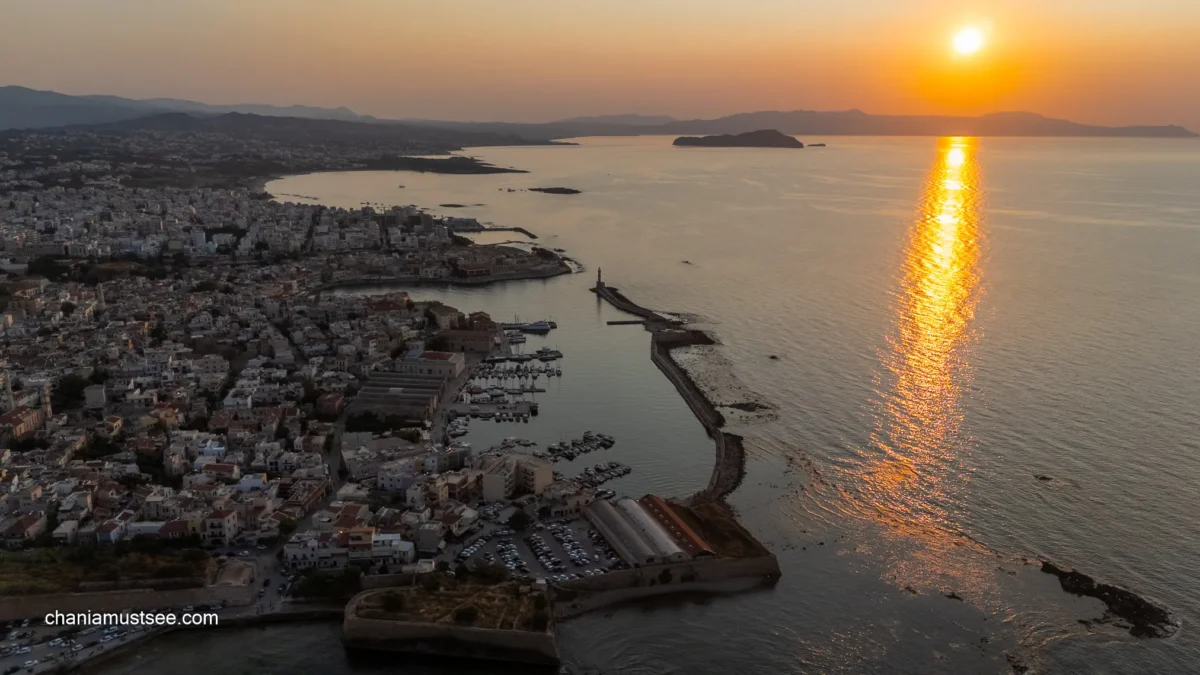
Construction on the harbour basins officially commenced around 1320 to transform Chania (then beautifully documented in historic texts as La Canea or the Port of Canea) into a supreme naval and commercial hub. The Venetian military engineers intelligently divided the harbour into two highly specialised zones:
- The Western Basin: Engineered with shallow waters specifically for unloading commercial merchant goods directly into large shoreline warehouses.
- The Eastern Basin: Dedicated entirely to intensive shipbuilding, naval repairs, and fleet maintenance.
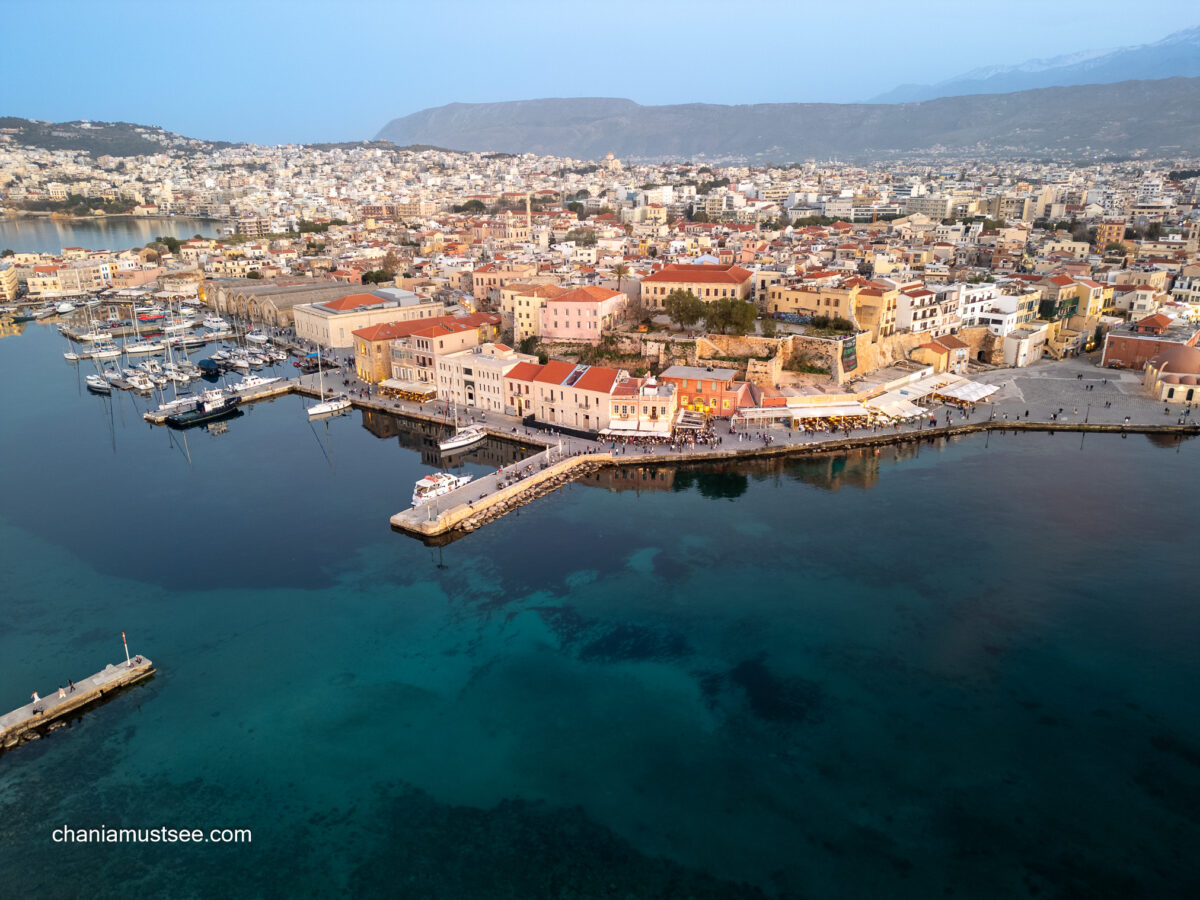
To safely house and repair the fearsome Venetian war galleys, workers erected the Neoria (massive stone shipyards or arsenals) along the eastern waterfront between 1467 and 1599. At its economic peak, the Port of Chania bustled with international merchants, heavily armed galleys, and elite naval guards, all securely protected by stout sea walls and the impenetrable Firkas Fortress guarding the western entrance.
Key Historical Transitions of Chania Harbour
| Historical Era |
Primary Port Function |
Major Architectural Changes |
Current Status / Modern Use |
| Venetian Era (13th–17th c.) |
Main Mediterranean Trade Lifeline & Strategic Naval Base |
Built the original sea walls, Firkas Fortress, and 17 Neoria shipsheds |
Preserved as core historical monuments and museums |
| Ottoman Era (1645–19th c.) |
Regional Military Hub & Local Trade Port |
Demolished 9 arsenals; built the Janissaries Mosque; reshaped the Lighthouse into a minaret shape |
Repurposed as cultural exhibition spaces and art galleries |
| Modern Era (20th c.–Present) |
Cultural, Touristic, and Dining Soul of Chania’s Old Town |
Walled city declared a protected heritage site in 1965; extensive stone restoration projects |
Vibrant pedestrian zone hosting fishing boats, sailing yachts, and boutique cafés |
The Evolution and Commercial Decline of the Port
The golden commercial era of the Chania Venetian Harbour changed permanently in 1645 when the city fell to the invading Ottoman Turks after a brutal siege. Under Ottoman rule, the harbour’s commercial prominence slowly declined. The Ottoman authorities saw little naval use in Chania’s relatively shallow waters and, unfortunately, allowed significant portions of the basins to silt up over the decades. They actively repurposed or demolished several original Venetian structures; specifically, workers tore down nine of the seventeen vaulted shipsheds to convert the area into open military storage spaces during the Turkish occupation.
By the dawn of the 19th century, the rapid global emergence of massive, deep-draft steamships made the medieval harbour increasingly impractical for heavy international trade. Consequently, most large-scale commercial shipping permanently moved to the deep, sheltered natural harbour of Souda Bay, located just east of the city. Souda quickly established itself as Chania’s new primary commercial port, gradually phasing out the Old Venetian Port of Chania as a working industrial harbour. By the mid-20th century, major passenger ferries and industrial trade ships docked exclusively at Souda, leaving the old harbour to be affectionately utilised only by local fishing boats, traditional wooden kaïks, and private sailing yachts.
Ultimate Must-See Sights & Waterfront Landmarks
When exploring the vibrant perimeter of the Chania Harbour, you will encounter remarkably preserved landmarks that elegantly tell the multi-layered story of Crete’s past. Ensure you include these top sights on your walking itinerary:
1. The Lighthouse of Chania (Faros)
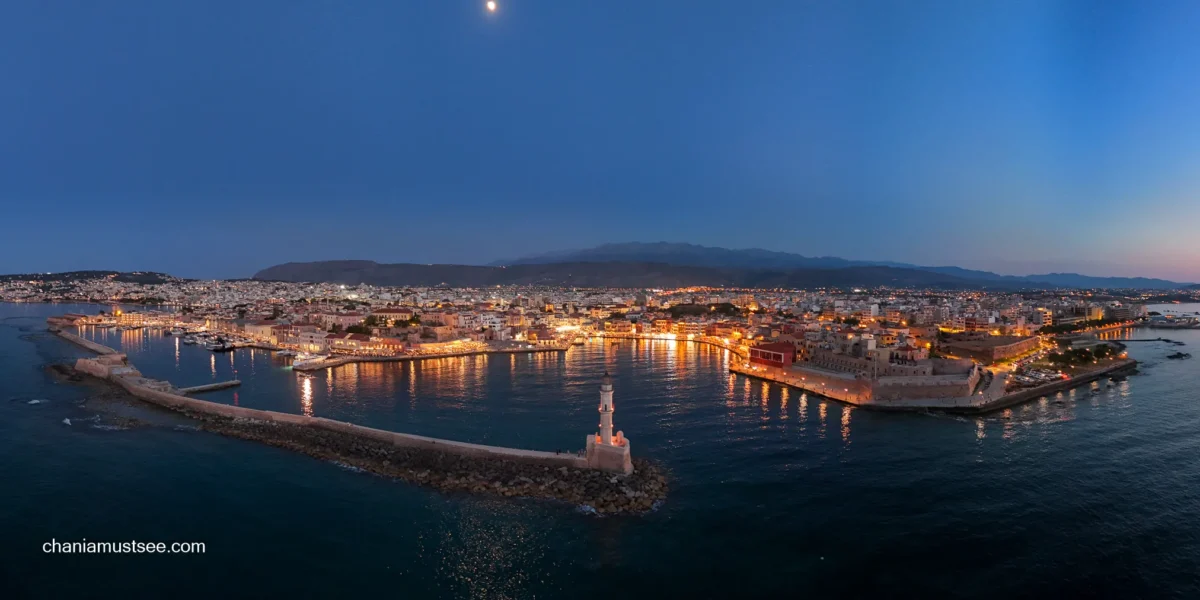
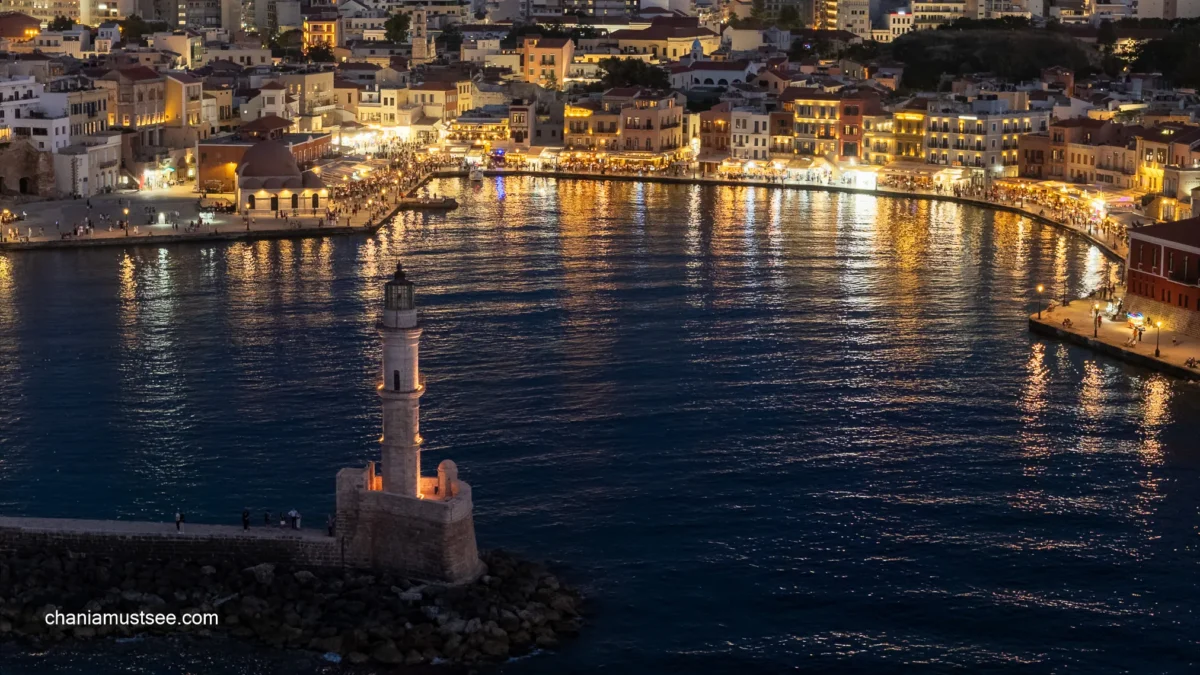
The iconic, 21-metre-high Lighthouse of Chania stands proudly at the edge of the eastern breakwater. While the Venetians initially constructed the stone base in the late 16th century, Egyptian artisans thoroughly rebuilt the structure into its present, globally recognised form around 1830 during a brief period of Egyptian administration. Featuring a highly unique, minaret-shaped architectural style, this sea beacon serves as the ultimate symbol of Chania. Visitors can enjoy a scenic walk along the top of the concrete breakwater to examine its exterior up close, though the internal staircase remains closed to climbing for safety reasons.
2. Firkas Fortress
This imposing Venetian fortress anchors the absolute northwest corner of the old harbour, with construction finishing just before the Ottoman conquest. The name “Firka” derives from the Arabic word for military barracks, as the complex housed elite Venetian regiments and later Ottoman soldiers. In medieval times, guards would stretch a massive iron chain from the base of Firkas across the harbour entrance to the lighthouse to completely lock the port during naval emergencies. Do not miss the small, photogenic corner watchtower; this is the exact historical spot where local authorities triumphantly raised the Greek flag in 1913 to officially celebrate Crete’s historic unification with the Kingdom of Greece. Today, the fortress grounds host the main building of the Maritime Museum of Crete.
3. Maritime Museum of Crete
Conveniently located right at the main entrance gates of Firkas Fortress, this world-class museum displays Chania’s deep seafaring heritage. Inside its historic halls, you can browse a brilliant collection of highly detailed model ships, ancient naval instruments, rare nautical maps, historical photographs, and authentic relics spanning the Minoan era through the dramatic Battle of Crete in World War II. Furthermore, a fascinating museum annexe operating inside one of the nearby restored Venetian arsenals proudly displays a stunning, full-size working replica of a Bronze Age Minoan ship!
4. The Grand Arsenal (Megalo Arsenali)
As the westernmost and most architecturally imposing shipyard building on the quay, the Grand Arsenal immediately stands out with its incredibly thick stone walls. Completed in the early 1600s, it marked the final arsenal built by the Venetians. The Ottomans later modified the structure by adding a spacious second storey. Over its long life, this versatile building has served as a public school, a military hospital, and even as Chania’s official City Hall in the early 20th century. After suffering severe bomb damage during World War II, the space was beautifully restored in the 1990s. Today, it proudly houses the Centre for Mediterranean Architecture, hosting prestigious international art exhibitions, cultural events, and architectural conferences.
5. Mosque of the Janissaries (Yali Tzami)
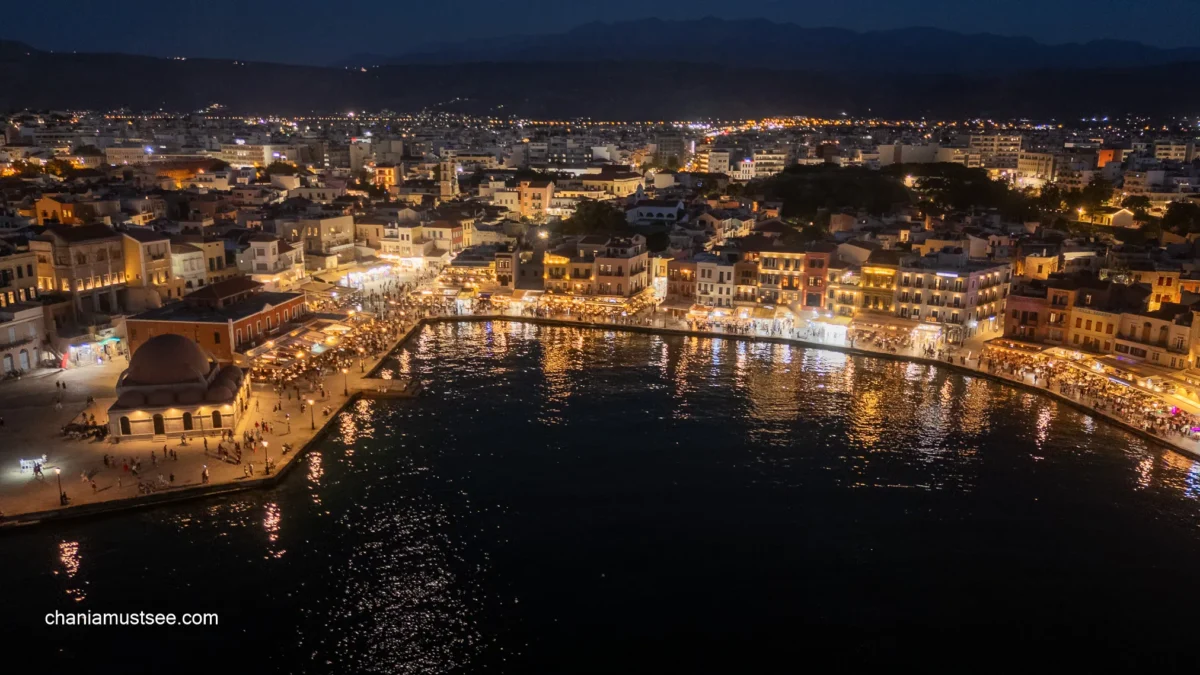
This instantly recognisable, multi-domed structure, gracing the central harbour front, is the oldest surviving Ottoman building on the island of Crete, erected around 1645. Officially named the Kioutsouk Hasan Mosque to honour the very first Ottoman military commander of Chania, the building features an elegant cubic base topped by a massive central dome and several smaller surrounding spheres. The mosque permanently ceased its religious functions in the early 20th century, and authorities removed its tall minaret decades ago. Following a meticulous interior restoration, it now serves as a vibrant, bright exhibition hall showcasing beautiful paintings, sculptures, and authentic local Cretan crafts.
6. The Neoria (Venetian Shipyards)
Lining the eastern curves of the marina, the Neoria are the majestic, arched stone shipsheds where medieval artisans meticulously built and repaired the Venetian navy. These long, vaulted structures originally featured open seaside fronts so sailors could easily drag heavy wooden galleys out of the water for winter maintenance. Several of these grand stone halls still stand in a striking, unbroken row by the water. If you look inside the Moro Dockyard at the far end of the row, you will discover the active local sailing club and an educational exhibition space dedicated to ancient shipbuilding techniques.
A Personal Insider Routine: The Magic of the Eastern Pier
While thousands of tourists flock to the western promenade to enjoy drinks, I am always drawn to the peaceful, raw character of the eastern docks. If you want to experience the true soul of the Old Venetian Port, I highly recommend setting your alarm early to catch the sunrise. At dawn, the water turns into a sheet of glassy, mirror-like calm, and you can watch the local fishermen quietly tending their nets on traditional wooden boats.
My absolute favourite routine is to walk past the bustling cafés and make the long journey along the eastern pier towards the base of the lighthouse. As you leave the main dining square behind and step onto the ancient stone breakwater, the crowds instantly thin out, and a beautiful, peaceful silence falls over you. The walk out to the lighthouse is wonderfully tranquil; far from the urban buzz, you hear nothing but your own footsteps and the gentle sea breeze. Once you finally reach the base of that historic Egyptian beacon, you unlock a spectacular, uninterrupted 360° panoramic view of the entire harbour, the pastel-coloured Venetian town embracing the coastline, and the dramatic, snow-capped outlines of the White Mountains towering in the distance. It is a postcard view come to life that you can gaze at for hours.
Crucial Directions, Access & Parking Advice
Reaching the Old Venetian Port of Chania is straightforward, but because the entire historic harbour area is strictly pedestrian-only, you must plan your vehicle parking.
- By Foot: If you are staying in Chania’s Old Town, you can easily walk to the waterfront promenade from any central location within 5–10 minutes.
- By Car: Drivers arriving via the National Road should head towards the city centre and follow signs for the Old Town or Chania Port. Because cars are banned on the waterfront quays, you should navigate directly to the large public parking lots located at the Talos Square (near Firkas Fortress) on the west side, or around the safe marina docks near the Sabbionara Gate on the east side.
- By Bus: Local public buses drop passengers off at the main central square (1866 Square), from where a short 500-metre walk through the beautiful alleys brings you straight to the water.
Take a look